

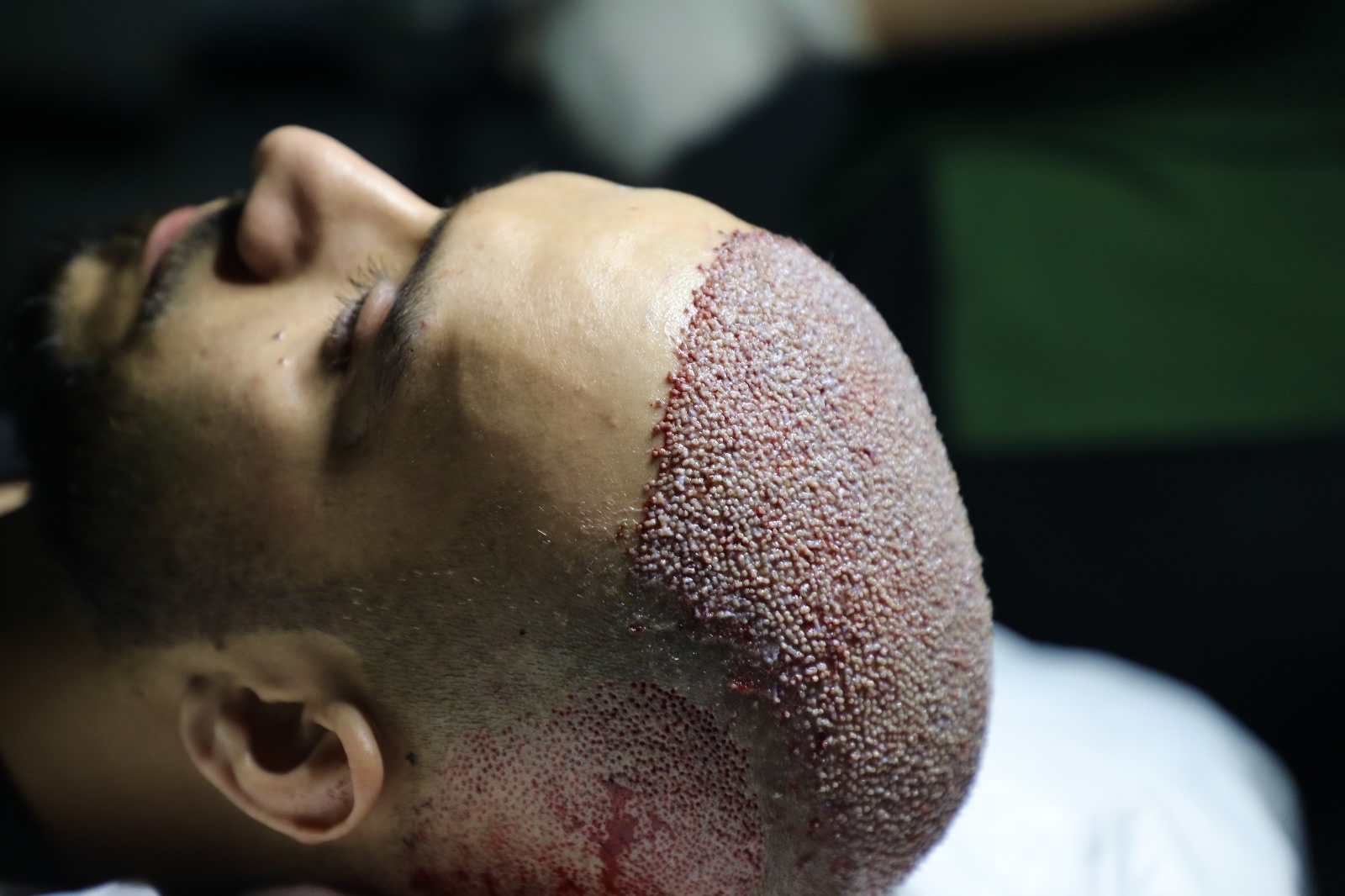
Sapphire FUE vs DHI vs classic FUE: the short answer
Sapphire FUE, DHI and classic FUE are all follicular unit extraction (FUE) hair transplant techniques: grafts are taken one by one from the donor area in the same way. Sapphire FUE opens the finest channels, so it places the most grafts per square centimeter and gives the most precise control of hair direction. DHI implants each graft with a pen whose needle is thicker than a sapphire tip, giving high density but fewer grafts per cm² than sapphire FUE. Classic FUE uses wider steel blades and is the most affordable. Sapphire FUE and DHI cost about the same, and both cost more than classic FUE.
- Extraction
- Identical in all three: grafts taken one by one with a micro punch
- Finest tip
- Sapphire FUE, then DHI, then classic FUE
- Grafts per cm²
- Highest with sapphire FUE; high with DHI; good with classic FUE
- Direction control
- Sapphire FUE first, DHI second, classic FUE third
- Price
- Sapphire FUE and DHI are close; both cost more than classic FUE
- How OZEL chooses
- By the case, the hair type and the thickness of the skin
What sapphire FUE, DHI and classic FUE have in common
The three names are often presented as completely different operations. They are not. All three are forms of follicular unit extraction (FUE): the grafts are removed one by one from the donor area at the back and sides of the head, with a micro punch, and no strip of skin is cut. The quality of that extraction, the size of the punch, the selection of grafts and the care taken to protect them, matters just as much whichever technique follows.
The difference lies in the second half of the procedure: how the recipient area is opened, and how each graft is placed. That is what changes the density, the direction and the price.
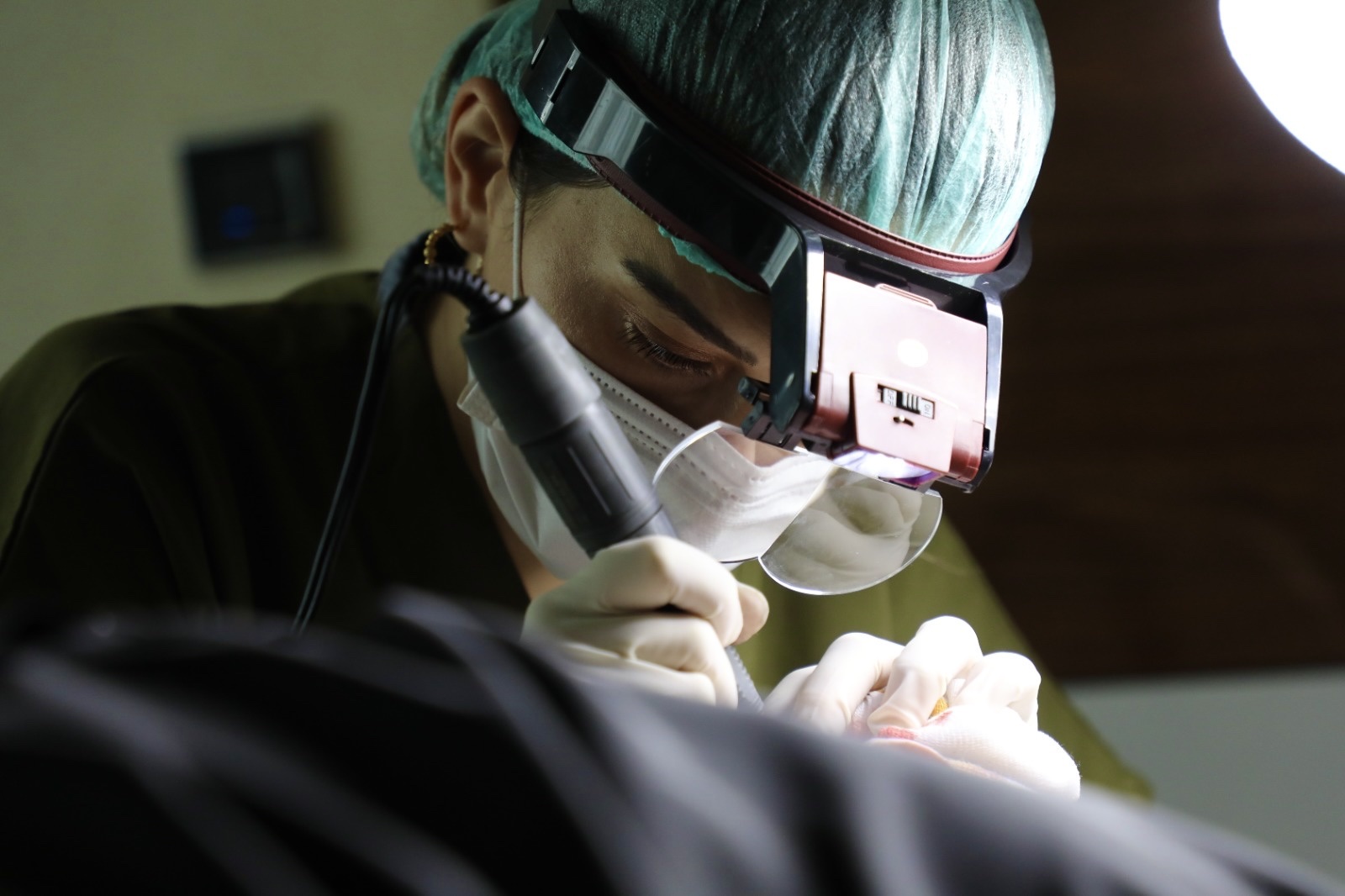
Classic FUE
In classic FUE, the channels that will receive the grafts are opened with steel blades or slits, and the grafts are then placed into them. It is the original form of the technique, reliable and well established, and it gives a good, natural result in standard cases.
Because the steel blade is wider than the alternatives, the channels cannot sit quite as close together, so the achievable density and the fine control of direction are good rather than exceptional. Its main advantage is price: classic FUE is the most affordable of the three.
Sapphire FUE
Sapphire FUE follows the same extraction, but the channels are opened with blades made of sapphire. A sapphire tip is the finest of the three techniques, sharper and smoother than steel, and it can be chosen in very small sizes to match each graft.
That fine tip is what makes the difference. Finer channels can be placed closer together, so more grafts fit into every square centimeter than with any other technique. And because each channel is opened at a chosen angle and direction before the graft goes in, sapphire FUE gives the most precise control of the direction of the hair, which is what makes a hairline look natural.
This is why sapphire FUE is the technique we use for most men at OZEL, combined with extraction using a punch sized to each patient’s skin. You can read how it fits into the full procedure on our hair transplant for men page.
DHI (Direct Hair Implantation)
In DHI, the channel is not opened in advance. Each graft is loaded into an implanter pen, and the pen creates the channel and places the graft in a single movement. This gives the specialist good control of each graft, and it can be very useful when working between existing hair, for example to add density without shaving, which is often requested by women.
The limit is the tip itself: the needle of a DHI pen is thicker than a sapphire tip. Density is therefore high, but fewer grafts fit per square centimeter than with sapphire FUE, and the control of direction, while very good, comes second to sapphire.
Sapphire FUE vs DHI vs classic FUE: side-by-side comparison
| Classic FUE | Sapphire FUE | DHI | |
|---|---|---|---|
| Extraction | Grafts taken one by one with a micro punch | Grafts taken one by one with a micro punch | Grafts taken one by one with a micro punch |
| Channels | Opened with steel blades or slits | Opened with fine, smooth sapphire blades | Created as each graft is implanted, with an implanter pen |
| Tip size | Wider steel blade | The finest tip of the three | Pen needle, thicker than a sapphire tip |
| Grafts per cm² | Good | The highest: finer channels sit closer together | High, but fewer than sapphire FUE |
| Control of hair direction | Good | The most precise | Very good |
| Price | The most affordable | Higher than classic FUE, close to DHI | Higher than classic FUE, close to sapphire FUE |
| Best suited to | Standard cases | Large areas and dense, natural hairlines | Smaller areas or adding density between existing hair |
Density: why sapphire FUE places the most grafts per cm²
The density of a hair transplant depends on how closely the grafts can be placed without harming each other or the skin. Every channel needs a little healthy space around it. The finer the tip that opens the channel, the smaller that channel, and the closer the next one can be.
A sapphire tip is finer than the needle of a DHI pen, and both are finer than a classic steel blade. So, for the same area, sapphire FUE allows the highest number of grafts per square centimeter, DHI comes next, and classic FUE third. For a patient who wants a dense, full hairline, this is often the deciding factor.
Control of hair direction: what makes a hairline look natural
Natural hair never grows straight out of the scalp. At the hairline it lies forward and slightly to the side, and the angle changes gradually across the head. A transplanted hairline looks natural only when every graft follows that pattern.
With sapphire FUE, each channel is opened at the exact angle and direction chosen for that spot, and the graft then follows it. This gives the most precise control of direction. DHI also gives very good control, as the pen places each graft individually, and classic FUE gives good control. In order: sapphire FUE first, DHI second, classic FUE third.
Price: sapphire FUE vs DHI vs classic FUE
Sapphire FUE and DHI cost about the same, and both cost more than classic FUE, which remains the most affordable option. In practice, the final price of a hair transplant depends far more on the area to treat and the number of grafts than on the name of the technique. At OZEL every quote is personal, confirmed in writing after a free online consultation, with no obligation.
Which technique is right for you?
There is no single best technique for everyone. At OZEL, our specialists choose the technique for each patient based on three things:
- The case: the size of the area, the density you want, and whether existing hair must be preserved
- The hair type: thickness, texture and the natural direction of growth
- The thickness of the skin
As a general guide:
- For a dense, natural hairline or a large area, sapphire FUE is usually the strongest choice, with the highest density and the finest control of direction. Most of our hair transplants for men are performed this way.
- For adding density between existing hair, DHI can be the better fit, which is why it is often used in hair transplants for women, usually without shaving the recipient area.
- For a beard or eyebrows, we use sapphire FUE or DHI depending on the skin; read more about beard transplants and eyebrow transplants.
- For a standard case on a tighter budget, classic FUE remains a reliable option.
The simplest way to know is to ask. Send your photos on WhatsApp, or try our AI Hairline Studio, and a specialist will recommend the technique that will give you the most natural result.
Sapphire FUE vs DHI: frequently asked questions
Which is better, sapphire FUE or DHI?
It depends on the case. Sapphire FUE places more grafts per square centimeter and gives the most precise control of hair direction, because a sapphire tip is finer than the needle of a DHI pen. DHI can be the better fit for adding density between existing hair. At OZEL the choice is made for each patient based on the case, the hair type and the skin thickness.
Is DHI more expensive than sapphire FUE?
No. Sapphire FUE and DHI cost about the same, and both cost more than classic FUE. The final price depends mainly on the area to treat and the number of grafts.
Which technique gives the highest density?
Sapphire FUE. Its tip is the finest of the three, so channels can sit closer together and more grafts fit into every square centimeter. DHI comes second and classic FUE third.
Is the extraction different between sapphire FUE, DHI and classic FUE?
No. All three use follicular unit extraction: grafts are taken one by one from the donor area with a micro punch. The techniques differ in how the recipient area is opened and how the grafts are placed.
Can DHI be done without shaving?
DHI is well suited to implanting between existing hair, so it is often used when the recipient area is not shaved, especially for women. Whether shaving is needed depends on your case.
Which technique does OZEL use?
OZEL performs sapphire FUE, DHI and classic FUE. Most men’s hair transplants are performed with sapphire FUE; for women, beards and eyebrows the technique is chosen by the case, the hair type and the thickness of the skin.