Men’s hair transplant at OZEL: at a glance
A men’s hair transplant at OZEL Hair Transplant in Istanbul, Turkey is an FUE (follicular unit extraction) procedure in which healthy follicles are taken one by one from the back and sides of the head and implanted into thinning areas through channels opened with fine sapphire blades. It is planned around two things: getting the most hairs from the fewest grafts, and designing a hairline that suits your face.
- Technique
- FUE extraction with sapphire blade implantation (sapphire FUE)
- Graft planning
- By hair count: grafts with 3 or more hairs are selected to protect the donor area
- Anesthesia
- Local anesthesia, with comfort-focused modern techniques
- Procedure
- Usually completed in a single day
- Results
- New growth from months 3 to 6; final result at 12 to 18 months
- Clinic
- OZEL Hair Transplant, Esenyurt, Istanbul · hair transplantation since 1998 · 13 languages
- Consultation
- Free and online: send photos on WhatsApp or use the AI Hairline Studio
A men’s hair transplant is more than moving hair
Male pattern hair loss (androgenetic alopecia) usually thins the hairline, the temples and the crown, while the hair at the back and sides of the head stays strong for life. A hair transplant relocates those resistant follicles from this donor area to the areas that need them, where they keep growing as they always have.
The principle is simple. Doing it well is not. Every patient has a limited donor supply, a unique face, and hair with its own thickness, texture and direction. At OZEL Hair Transplant we treat a men’s hair transplant as a medical and aesthetic procedure at the same time: it has to be dense, it has to last, and above all it has to suit your face so naturally that no one would ever guess you had one.
That is why our process is built on four connected steps, each planned before the next begins.
1. Donor area analysis: more hair from fewer grafts
Before anything else, we study your donor area in detail. Under magnification we assess the density of the zone, the quality of the follicles, and, most importantly, how many hairs each follicular unit (graft) contains. Grafts naturally carry one, two, three or more hairs.
This study lets us plan around the number that truly matters for coverage: hairs, not just grafts. By selecting grafts that carry three or more hairs, we reach the hair count your plan needs while removing far fewer grafts from the donor area.
Fewer extractions mean a donor area that stays even and natural-looking, with no visible thinning or patchiness, and a donor reserve that is preserved. This matters, because hair loss can progress over the years, and a well-protected donor area keeps your options open for the future.
2. Hairline design that belongs to your face
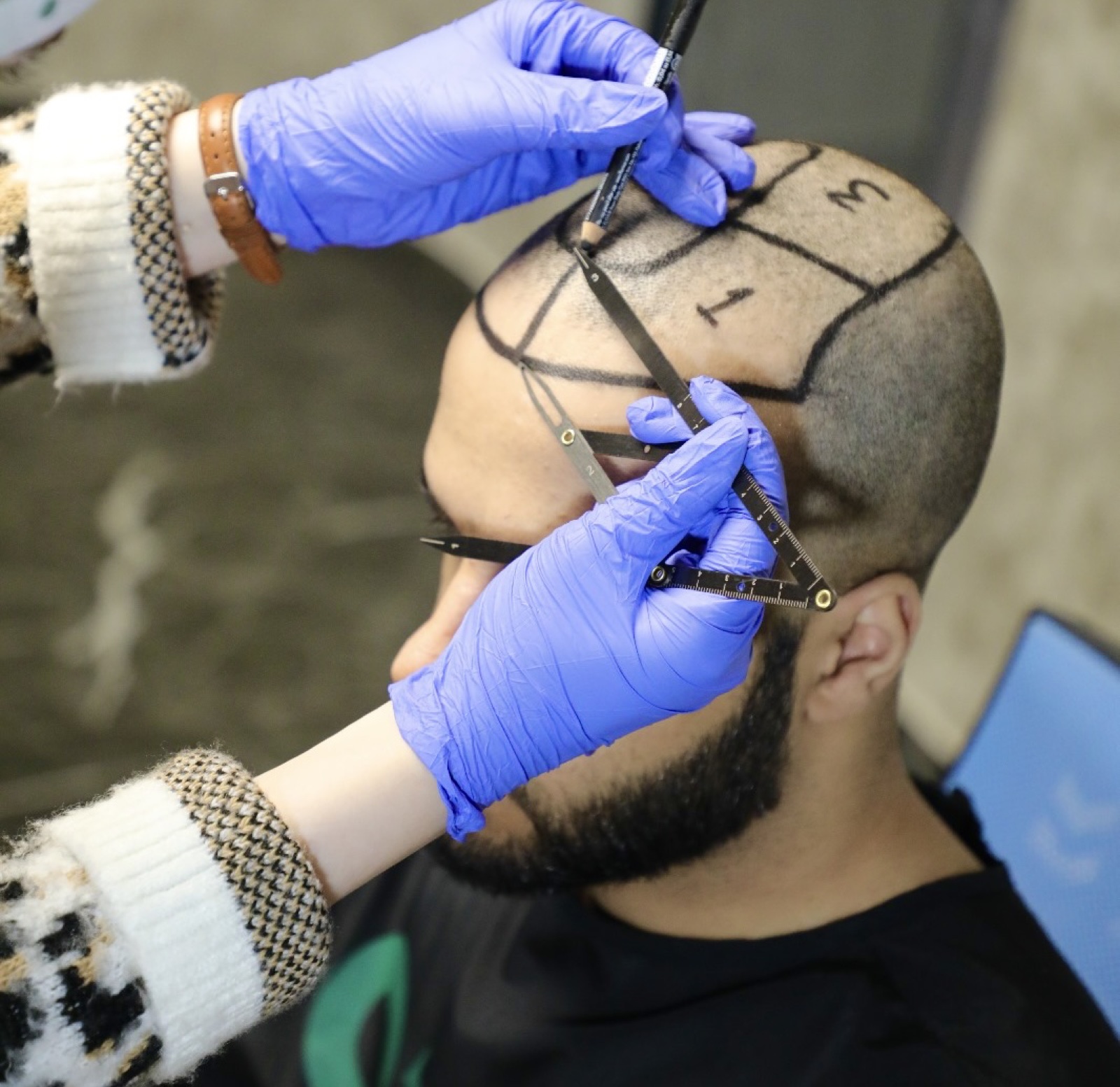
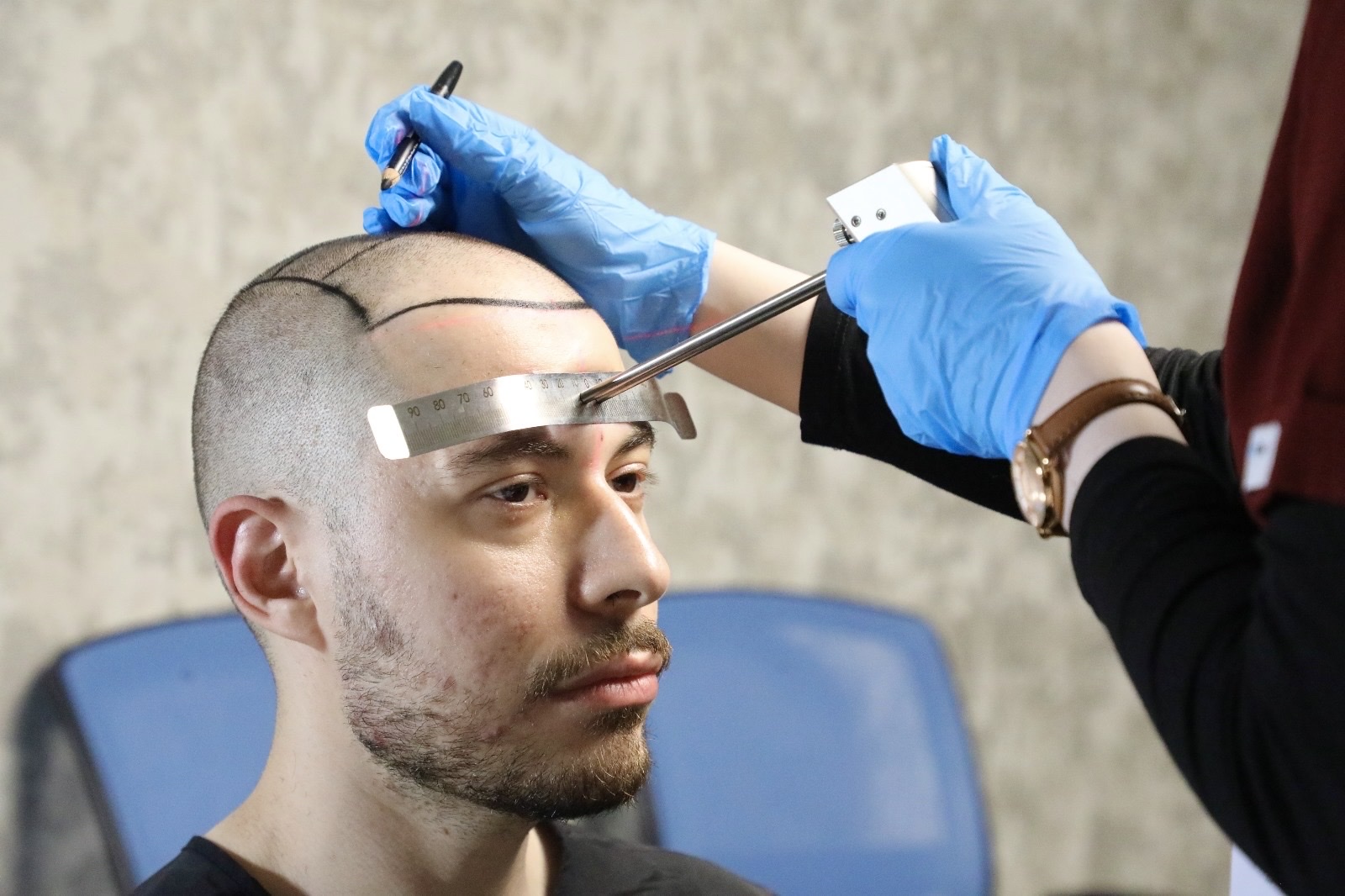
The hairline frames the face. It is the first thing people notice, and the detail that decides whether a hair transplant looks natural or artificial. A hair transplant is a cosmetic procedure as much as a medical one: dense hair is not enough if the line does not suit you.
Before drawing a single line, our team carries out a complete study of your face, taking into account:
- Facial proportions and anatomy, including the classic facial thirds
- Your age, and how your hairline should look as you get older
- Skin tone and the contrast between your hair and skin
- The size and shape of your nose and eyes, and even the length of your eyelashes
- The shape of your eyebrows
- The shape of the sides of your head and your temples
- Your hair type: thick or fine, straight, wavy or curly
Wherever possible, we do not invent a new hairline. We work to restore your original one, because the hairline you were born with is the line that fits your features best. The result is a front line with soft, slightly irregular edges and natural temple corners, the way hair grows in nature.
OZEL continually develops its hairline design tools, and today you can start the process yourself: our AI Hairline Studio analyses your facial proportions from a selfie and shares the design with our specialists.
3. Precision extraction: a punch sized to your skin
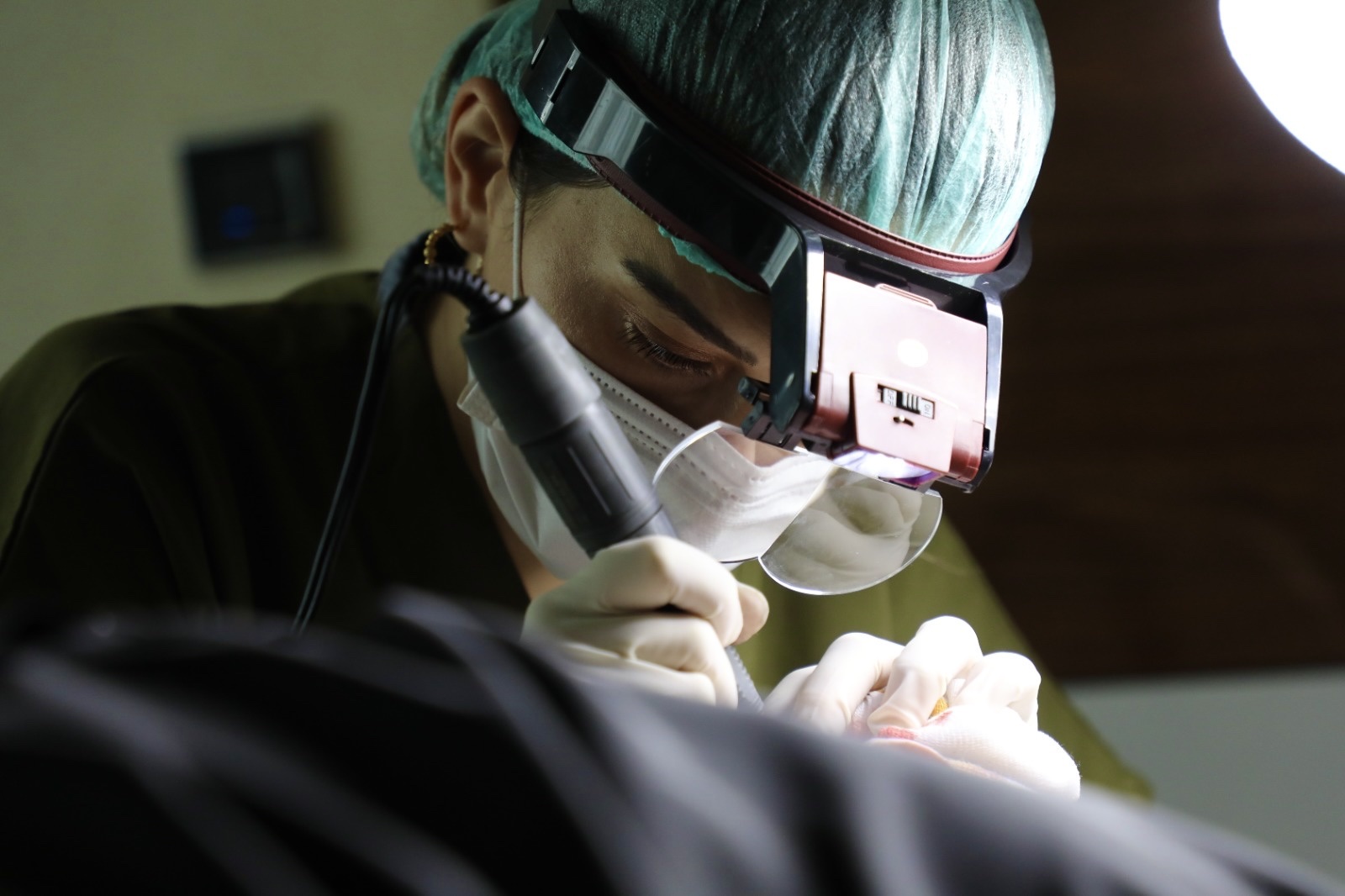
We extract grafts with the FUE (follicular unit extraction) technique, using a fine circular instrument called a punch. Skin thickness varies from one person to another, so we adjust the punch size to the thickness of your skin rather than using a single size for everyone.
A punch matched to your skin removes the follicle itself, without taking unnecessary surrounding tissue. This brings three clear benefits:
- Smaller wounds in the donor area, which heal quickly and discreetly
- Slim, well-preserved grafts that can be placed closer together
- Dense implantation without large gaps between the grafts
4. Sapphire implantation for maximum density
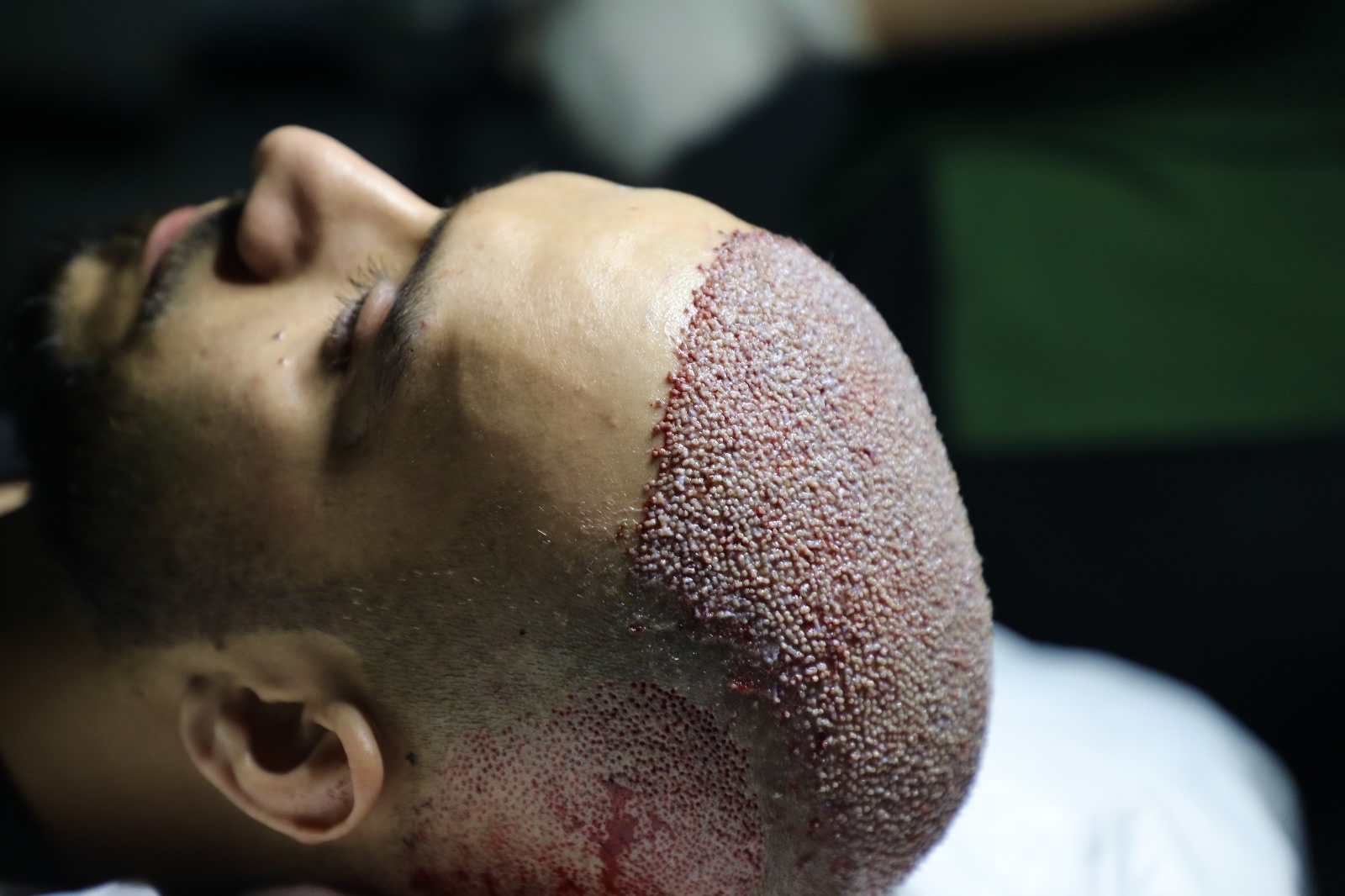
To create the channels where the grafts are placed, we use sapphire blades in the smallest suitable size. Fine, smooth sapphire tips allow us to open the greatest number of channels in the smallest possible area, so grafts can sit right next to each other. The tighter and more even the placement, the denser the hair looks once it grows.
Each channel is opened at a controlled angle and direction, following the natural flow of your existing hair. Controlling the direction and angle of every implanted graft is what makes transplanted hair grow, fall and move exactly like your own, so that it never looks implanted.
FUE, sapphire FUE and DHI: what is the difference?
All three are modern, minimally invasive hair transplant techniques. They share the same extraction method, follicular unit extraction (FUE), and differ mainly in how the recipient area is prepared and how grafts are placed.
| Classic FUE | Sapphire FUE | DHI | |
|---|---|---|---|
| Extraction | Grafts taken one by one with a micro punch | Grafts taken one by one with a micro punch | Grafts taken one by one with a micro punch |
| Channels | Opened with steel blades or slits | Opened with fine, smooth sapphire blades | Created as each graft is implanted, with an implanter pen |
| Tip size | Wider steel blade | The finest tip of the three | Pen needle, thicker than a sapphire tip |
| Grafts per cm² | Good | The highest: finer channels sit closer together | High, but fewer than sapphire FUE |
| Control of hair direction | Good | The most precise | Very good |
| Price | The most affordable | Higher than classic FUE, close to DHI | Higher than classic FUE, close to sapphire FUE |
| Best suited to | Standard cases | Large areas and dense, natural hairlines | Smaller areas or adding density between existing hair |
Sapphire FUE and DHI cost about the same, and both cost more than classic FUE. The real difference is the tip that opens the skin: a sapphire tip is finer than the needle of a DHI pen, so more grafts fit into every square centimeter and each one can be placed with the most precise control of angle and direction. For direction control, sapphire FUE comes first, DHI second and classic FUE third.
At OZEL, a men’s hair transplant combines FUE extraction with a punch sized to your skin and implantation with the smallest suitable sapphire blades. Your specialist confirms the most suitable technique for your hair after reviewing your case. For a deeper comparison, read our guide sapphire FUE vs DHI vs classic FUE.
One integrated result
None of these steps works on its own. The donor study decides which grafts are taken; the hairline design decides where they go; the extraction protects their quality; and sapphire implantation places them densely and in the right direction. Together they lead to a result that is complete in every respect: natural, dense, and in harmony with your face, with a donor area that stays healthy.
Who is a good candidate for a men’s hair transplant?
Most men with male pattern hair loss (from early recession to advanced stages on the Norwood scale) and a healthy donor area are good candidates. Before recommending a procedure, our specialists consider:
- Your pattern and stage of hair loss, and how it may progress
- The density and quality of your donor area
- Your age, general health and expectations
If a transplant is not the right choice for you yet, we will tell you, and explain what may help instead.
Hair transplant recovery timeline and results
Every patient heals at their own pace, and your doctor will give you personal aftercare instructions. As a general guide:
- The first daysSmall crusts form around the grafts and the donor area begins to heal. You follow a gentle washing routine.
- Weeks 2 to 6Many transplanted hairs shed. This is a normal part of the cycle: the follicles stay in place and rest.
- Months 3 to 6New hair begins to grow, fine at first and stronger month by month.
- Months 12 to 18The final density and texture become visible.
Experience since 1998
Every step on this page rests on the experience of our medical team, which has focused exclusively on hair transplantation since 1998 and has performed thousands of successful hair transplant procedures. That experience is what turns a careful plan into a result that looks like it was always yours.
Learn more about OZEL, or see real before and after results.
Why men choose Istanbul, Turkey for a hair transplant
Istanbul has become one of the world’s leading destinations for hair restoration, thanks to experienced clinics, modern techniques and teams used to welcoming international patients. When choosing a clinic, look beyond the price: ask how the donor area is assessed, who designs your hairline, and how grafts are extracted and implanted.
OZEL Hair Transplant has worked exclusively in hair transplantation since 1998. Our clinic is in Esenyurt, Istanbul, our team speaks 13 languages, and OZEL has grown into Egypt, Jordan, Iraq and Libya. Your consultation starts online, free, before you travel.
Men’s hair transplant in Istanbul: frequently asked questions
How many grafts do I need?
It depends on the area to cover, the density you want and the quality of your donor area. Because we plan by hairs as well as grafts, many patients need fewer grafts than they expect. Your specialist will give you a personal estimate after reviewing your photos.
Is a hair transplant painful?
The procedure is performed under local anesthesia, using modern anesthesia techniques focused on your comfort. Most patients describe some mild tenderness in the first days, which is easily managed.
Will my hair transplant look natural?
That is the aim of every step: a hairline designed around your face, grafts implanted at the angle and direction of your natural hair, and density without gaps. Done well, a hair transplant should not be noticeable to others.
Will the donor area look thin afterwards?
Selecting grafts with more hairs means fewer extractions, and punch sizes matched to your skin keep wounds small. Both help keep the donor area even and preserve its reserve for the future.
When will I see the final result?
New hair usually starts growing after 3 to 6 months, and the final result is typically visible between 12 and 18 months after the procedure.
Can I see my new hairline before deciding?
Yes. Try our AI Hairline Studio with a selfie, then talk to a specialist, free and with no obligation.
How much does a hair transplant for men cost in Istanbul?
The price depends on your hair loss, the number of grafts you need and the technique. At OZEL, every quote is personal: after a free online consultation, your specialist confirms your plan and price in writing, with no obligation.
How long does a hair transplant take?
Most men’s hair transplants at OZEL are completed in a single day. The exact duration depends on the number of grafts in your plan.
When can I go back to work?
Many patients return to office work within about a week, once the small crusts have cleared. Your doctor will advise you based on your procedure and your job.
Is a hair transplant permanent?
Follicles taken from the donor area are naturally resistant to the hormone behind male pattern hair loss, so transplanted hair is long-lasting. Your native hair in other areas may still thin over time, which is why planning and protecting the donor area matter.
What is the difference between FUE and sapphire FUE?
Both extract grafts one by one. Sapphire FUE opens the recipient channels with fine, smooth sapphire blades instead of steel, so channels can be smaller and placed closer together for higher density and a natural look.
Which is better, sapphire FUE or DHI?
Both cost about the same and both cost more than classic FUE. Sapphire FUE usually places more grafts per square centimeter, because a sapphire tip is finer than the needle of a DHI pen, and it gives the most precise control over the direction of each hair. DHI can suit smaller areas or adding density between existing hair. Your specialist recommends the right one after reviewing your photos.