Beard transplant at OZEL: at a glance
A beard transplant (facial hair transplant) at OZEL Hair Transplant in Istanbul, Turkey moves hair follicles from the donor area at the back of the head to the beard, using sapphire FUE or DHI depending on the patient’s skin. A specialist draws a symmetrical beard line within the face’s natural borders, then implants grafts of two to three hairs, each angled downward in the natural direction of beard growth and blended into the sideburns, for a beard that looks and feels natural.
- Technique
- Sapphire FUE or DHI, chosen according to the type and thickness of the skin
- Beard line
- Designed by hand, identical on the right and left, including the contour around and below the mouth
- Grafts
- Selected grafts of two to three hairs, for a natural density and texture
- Direction
- Every hair placed at a low angle, pointing downward like a natural beard
- Common goals
- A full beard, filling patchy areas, defining the cheek line, the mustache and goatee, and connecting the beard to the sideburns
- Anesthesia
- Local anesthesia; you stay awake and comfortable
- Results
- New growth from months 3 to 6; final result at around 12 months
- Clinic
- OZEL Hair Transplant, Esenyurt, Istanbul · hair transplantation since 1998 · 13 languages
Why a beard transplant demands true craftsmanship
The beard is one of the most sensitive areas in hair transplantation. It sits at the center of the face, it is seen from every angle, and it is compared, side by side, every time you look in the mirror. A scalp transplant can hide small irregularities under longer hair. A beard cannot.
If one side of the beard line does not match the other, the asymmetry is immediately visible, and it becomes the first thing people notice. That is why, at OZEL, a beard transplant is treated as a precise medical and aesthetic procedure, not as a simple addition of grafts. Every decision, from the first line drawn on the cheek to the angle of the last hair, is made with the finished beard in mind.
1. Beard line design: the same on both sides
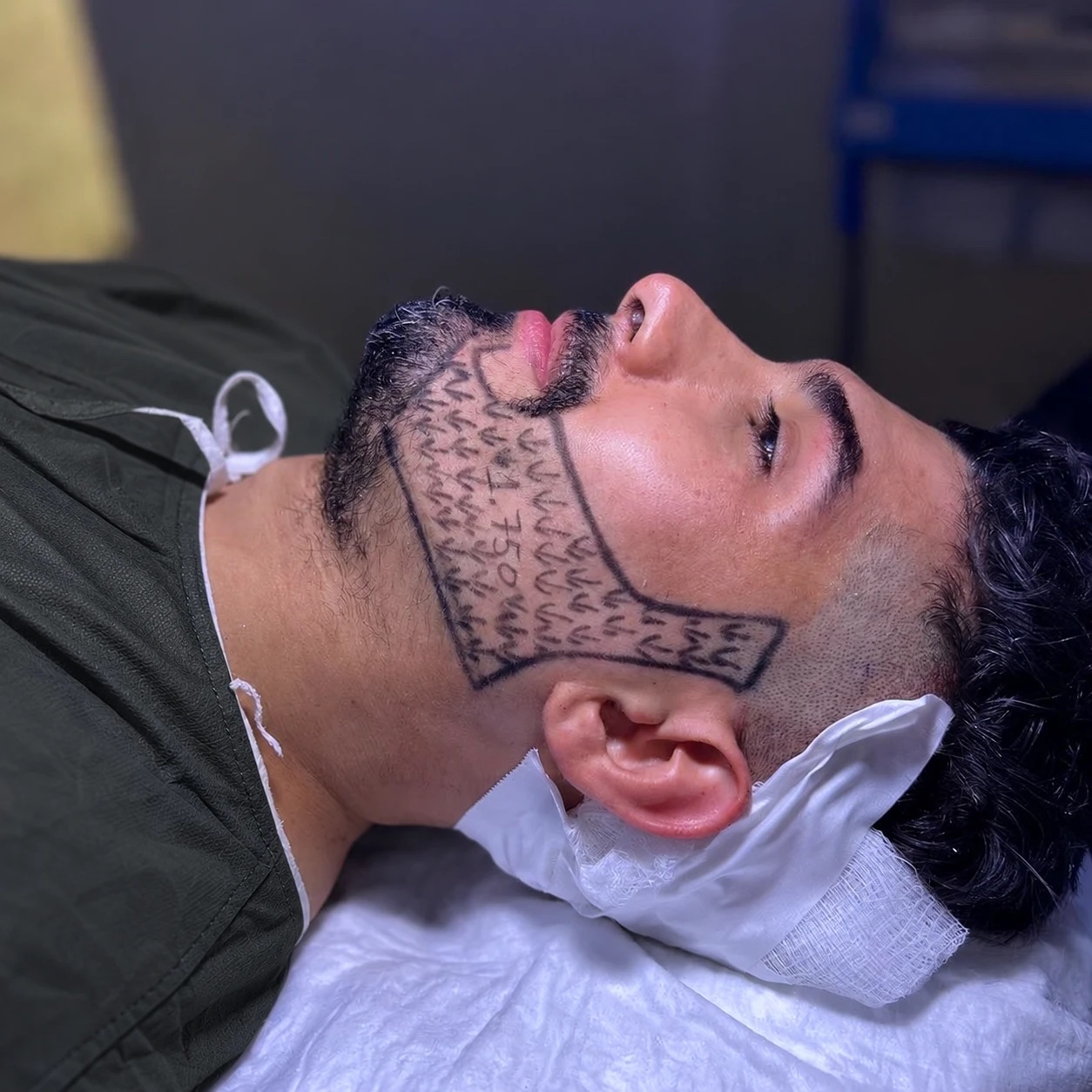
We give exceptional care and attention to the beard line design, because it determines the result more than any other step. Before a single graft is extracted, your specialist draws the new beard directly on your face and checks it from every angle:
- The cheek line is drawn at the same height and with the same curve on the right and the left.
- The contour around the mouth, the mustache and the area below the lower lip, is shaped so that both sides mirror each other.
- The goatee and chin are drawn to connect smoothly with the mustache and the jawline.
- The neckline is set at a natural level under the jaw.
Only when both sides are perfectly balanced, and you have approved the design, does the procedure begin. Symmetry is not a detail of a beard transplant. It is the foundation of it.
2. Natural borders and the right proportions
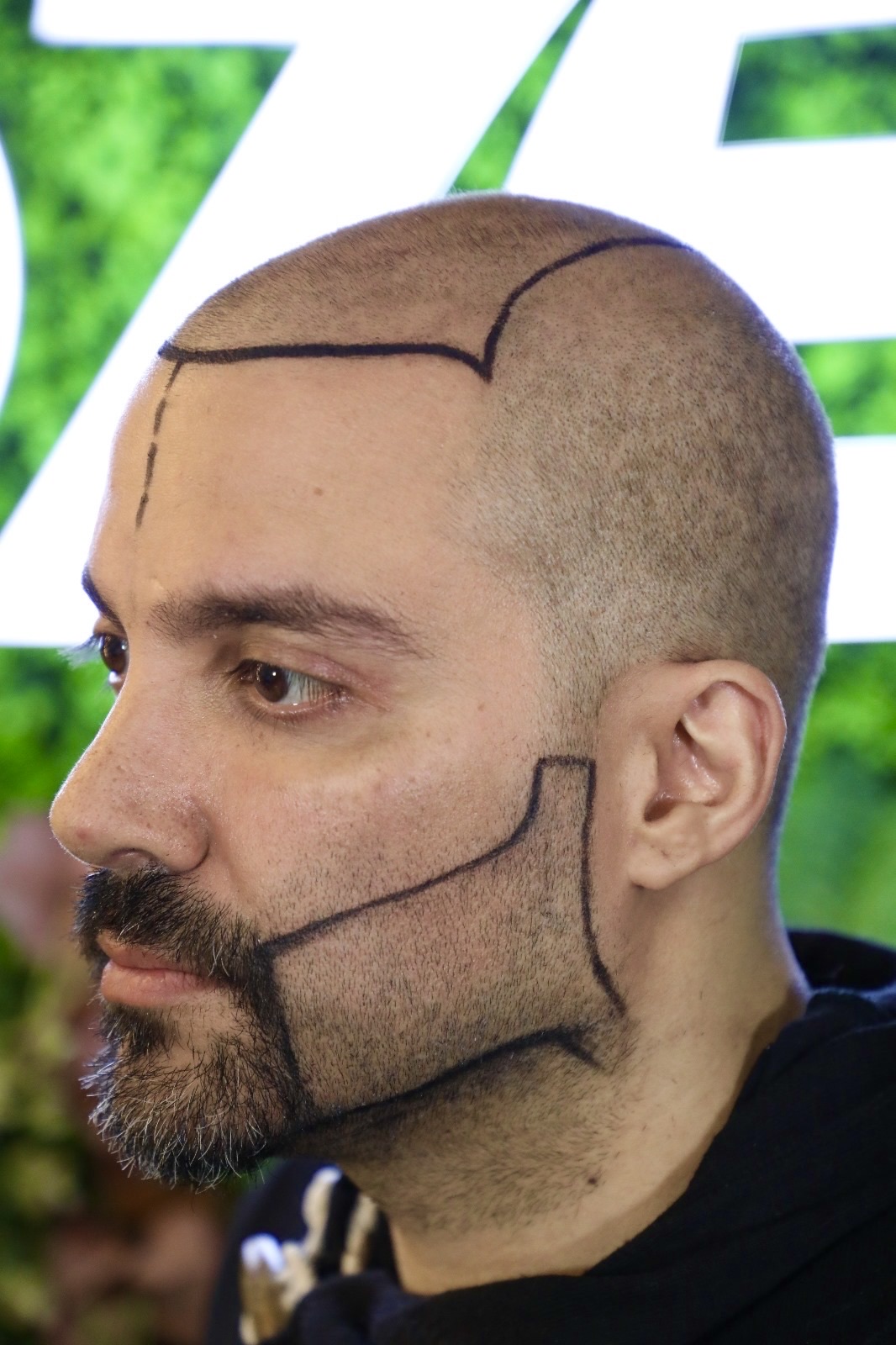
A natural beard has natural limits. The size and shape of the area we transplant must respect them precisely:
- If the beard extends beyond its natural borders and rises too high onto the cheeks, it invades the face and looks unnatural.
- If it stays too small and falls short of those borders, it looks just as unnatural, and the face loses its frame.
Our specialists design every beard within these borders, in proportion to your face, your jawline and your age. The aim is a beard that looks as if it had always grown there.
3. Selected grafts of two to three hairs
Facial hair grows differently from scalp hair, so the grafts must be chosen differently too. For beard transplantation we extract grafts that carry two to three hairs, and no more.
We do not use the larger four- and five-hair grafts for the beard. Grafts that are too large can create a tufted, unnatural look. The right graft size is what gives the beard a natural density, natural detail, a natural appearance and a natural feel to the touch.
4. The angle and direction of every hair
The direction of each hair is what separates a natural beard from a transplanted one. A real beard does not grow straight out of the skin. It lies close to the face and points downward, following the contour of the cheek and jaw.
At OZEL, every graft is implanted at a low angle and in the same direction as the natural beard around it, pointing downward rather than upward or outward. As the hair grows, it lies flat and flows naturally, instead of standing up. This is why our beard results look natural not only in the first months, but as the beard grows longer over the years.
5. A beard that connects seamlessly to the sideburns
A beard that stops short of the sideburns leaves a visible gap between the face and the scalp. We extend the beard so that it joins the sideburns and the hair of the head, with a gradual transition and no empty space between them. The result is one continuous, natural line from the temple to the chin.
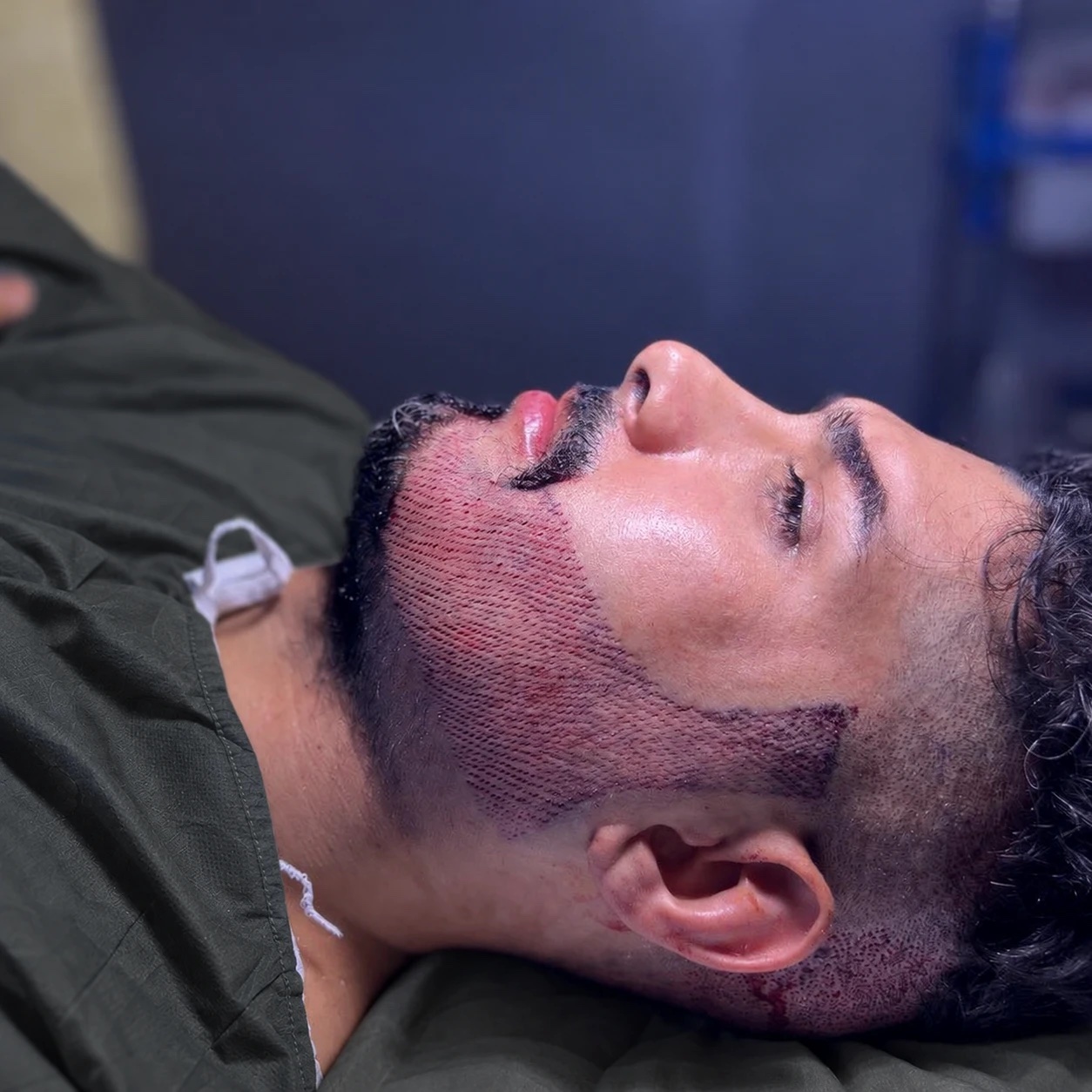
Sapphire FUE or DHI beard transplant: chosen for your skin
At OZEL we perform beard transplants with sapphire FUE or DHI. The choice depends mainly on the type and thickness of your skin, along with the area to treat and the nature of your existing facial hair.
Sapphire FUE opens very fine channels and allows grafts to be placed close together, with precise control of angle and direction. DHI implants each graft with a pen, which can suit work between existing beard hair. After reviewing your photos, your specialist recommends the technique that will give you the most natural beard. You can read a full comparison on our sapphire FUE vs DHI guide.
A team known for beard transplantation
Beard transplantation is one of the procedures OZEL is best known for. Over the years, our team has built a specific expertise in it, and many of our patients come to us for their beard after seeing the results of others.
What sets a beard transplant at OZEL apart is the skill of the people performing it. Our specialists are highly experienced in beard line design: in reading a face, in drawing a line that is identical on both sides, and in placing each graft with the patience and precision the beard requires. It is this craftsmanship, refined over thousands of procedures, that makes our beard transplants different.
Who is a good candidate for a beard transplant?
A beard transplant can be an excellent option for men who have a healthy donor area at the back of the head and would like:
- A full beard where little or no beard grows naturally
- To fill patchy or uneven areas of the beard
- A defined cheek line, mustache or goatee
- To connect the beard to the sideburns
- To cover scars on the face, depending on the case
Our specialists review your photos, your existing facial hair and your donor area before recommending a plan, and if a beard transplant is not the right option for you, we will tell you.
Recovery and results
Every patient heals at his own pace, and your doctor will give you personal aftercare instructions. As a general guide:
- The first daysSmall crusts form around the grafts and some redness is normal. You follow a gentle washing routine and avoid shaving the area.
- Weeks 2 to 6Many transplanted hairs shed. This is normal: the follicles stay in place and rest.
- Months 3 to 6New beard hair begins to grow, and it can be trimmed and shaped.
- Around month 12The final density, shape and texture of the beard become visible.
Why men choose Istanbul, Turkey for a beard transplant
Istanbul is one of the world’s leading destinations for hair and beard restoration. When choosing a clinic for a beard transplant, look beyond the price: ask who designs the beard line, how symmetry is checked, what size of grafts will be used, and how the angle of each hair is controlled.
OZEL Hair Transplant has focused exclusively on hair transplantation since 1998. We are based in Esenyurt, Istanbul, speak 13 languages and have grown into Egypt, Jordan, Iraq and Libya. Your consultation starts online, free and in complete privacy, before you travel. Learn more about OZEL, read about hair transplant for men, or see real before and after results.
Beard transplant in Istanbul: frequently asked questions
How does a beard transplant work?
Hair follicles are extracted from the donor area at the back of the head and implanted into the beard area, using sapphire FUE or DHI. At OZEL, a specialist first draws a symmetrical beard line, then implants grafts of two to three hairs at a low, downward angle that matches natural beard growth.
Will my beard transplant look natural?
That is the aim of every step: a beard line that is identical on both sides and stays within the face’s natural borders, grafts of two to three hairs, every hair pointing downward like a real beard, and a smooth connection to the sideburns.
Which is better for a beard transplant: sapphire FUE or DHI?
Both are used at OZEL. The choice depends mainly on the type and thickness of your skin. Sapphire FUE opens very fine channels with precise control of direction, while DHI implants each graft with a pen and can suit work between existing beard hair. Your specialist recommends the right technique after reviewing your photos.
How many grafts do I need for a beard transplant?
It depends on the area to cover and the density you want: filling patches needs far fewer grafts than a full beard. After a free online consultation with your photos, your specialist confirms the number of grafts in writing.
Why is symmetry so important in a beard transplant?
The beard is at the center of the face and both sides are always seen together. If the cheek line or the contour around the mouth is different on one side, the asymmetry is immediately visible. That is why our specialists draw and check the beard line on both sides before the procedure begins.
Can a beard transplant connect my beard to my sideburns?
Yes. We extend the beard so that it joins the sideburns and the hair of the head with a gradual transition, leaving no gaps between them.
Is a beard transplant painful?
The procedure is performed under local anesthesia, so you stay awake and comfortable. Most patients describe only mild tenderness and some redness in the first days.
When can I shave or trim my beard after the transplant?
Your doctor will give you personal instructions. As a general guide, the transplanted area should not be shaved in the first weeks, while the grafts settle. Once the new hair grows, it can be trimmed and shaped like the rest of your beard.
When will I see the final result of my beard transplant?
New beard hair usually starts growing after 3 to 6 months, and the final result is typically visible around 12 months after the procedure.
Is a beard transplant permanent?
Yes. The transplanted follicles come from the back of the head, an area that is genetically resistant to hair loss, so the hair they produce is permanent and grows like the rest of your beard.
How much does a beard transplant cost in Istanbul?
The price depends on the area to treat, the number of grafts and the technique. Every quote at OZEL is personal: after a free online consultation, your specialist confirms your plan and price in writing, with no obligation.