Note: This is a general guide. Every patient heals at their own pace, and the personal instructions your doctor gives you after the procedure always come first.
How long does hair transplant recovery take? The short answer
Recovery after a hair transplant is easier than most people expect. In the first three days there may be mild swelling and redness, and you sleep with your head raised. Between day 7 and day 14 the small crusts fall off, and most patients are back at office work within about a week. Between week 2 and month 3, much of the transplanted hair sheds, which is completely normal because the follicles stay under the skin. New hair starts to grow between months 3 and 6, and the final result, with its full density and texture, appears between months 12 and 18.
- Days 1 to 3
- Mild redness, possible swelling of the forehead; rest and sleep with your head raised
- Days 4 to 10
- Small crusts and mild itching; gentle daily washing, never pick the crusts
- Days 10 to 14
- The crusts fall off; a gradual return to normal life
- Week 2 to month 3
- Temporary shedding of the transplanted hair; the follicles stay in place
- Months 3 to 6
- New hair begins to grow, fine at first
- Months 6 to 12
- Density builds and the hair grows stronger
- Months 12 to 18
- The final result: full density and texture
Days 1 to 3 after a hair transplant: rest comes first
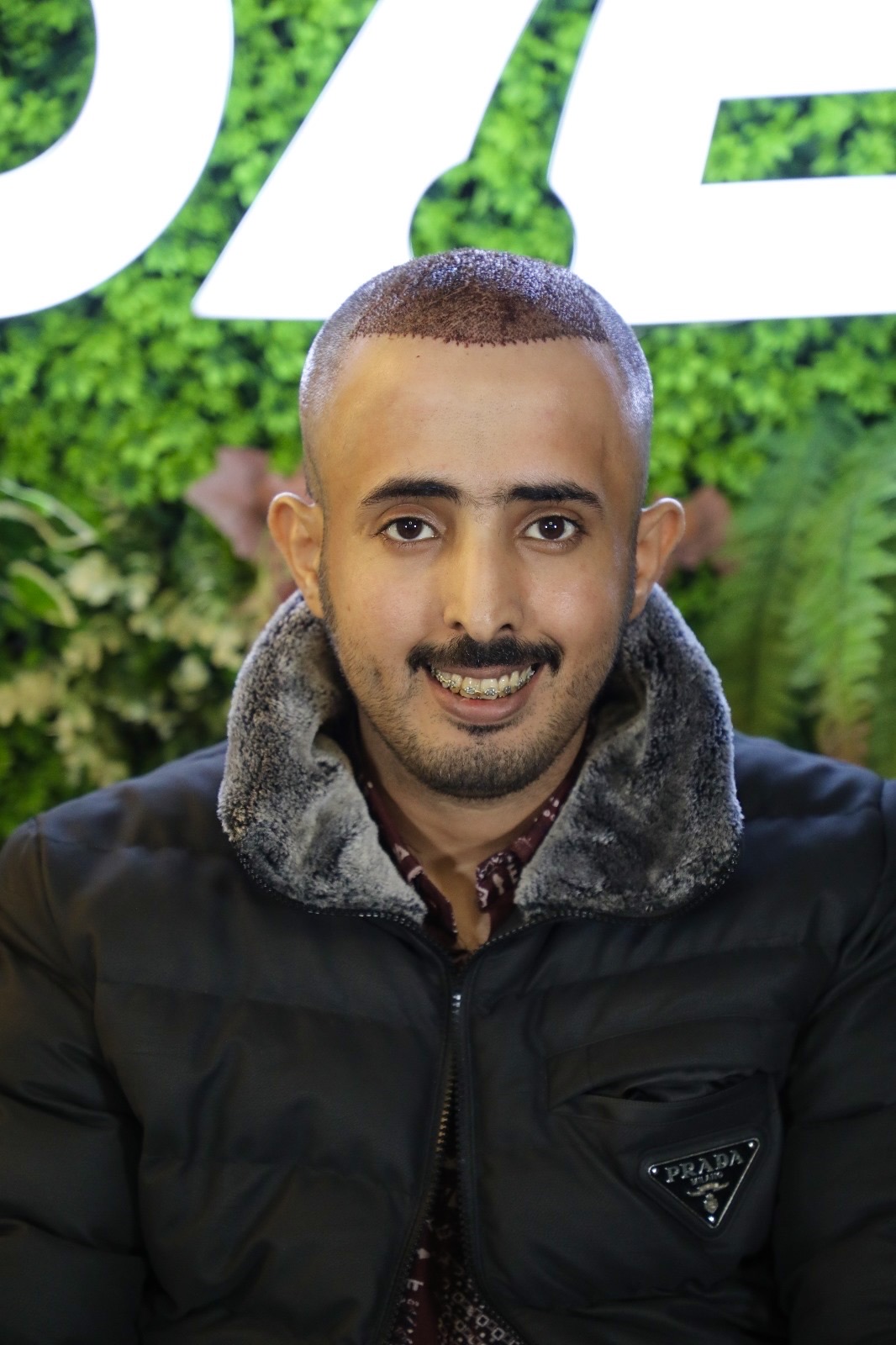
When the procedure is over, you go back to your hotel the same day. There is no hospital stay, because the procedure is performed under local anesthesia.
What is normal in these days:
- Mild redness in the recipient area and the donor area.
- A feeling of tightness or mild tenderness that is easy to manage.
- Swelling of the forehead, which can appear on day 2 or 3 and may move slightly down toward the eyes. It is common and usually goes away within a few days.
What you do:
- Sleep with your head slightly raised, on two pillows or with a travel pillow around your neck, for the first nights, so the grafts do not rub against the pillow and the swelling stays down.
- Follow the medication instructions for the medication kit you receive from us, exactly as our team explains them.
- Drink plenty of water and rest, and avoid bending over or lifting heavy things.
- Do not touch the transplanted area with your fingers, and do not wear a tight cap.
Days 4 to 10: washing, crusts and itching
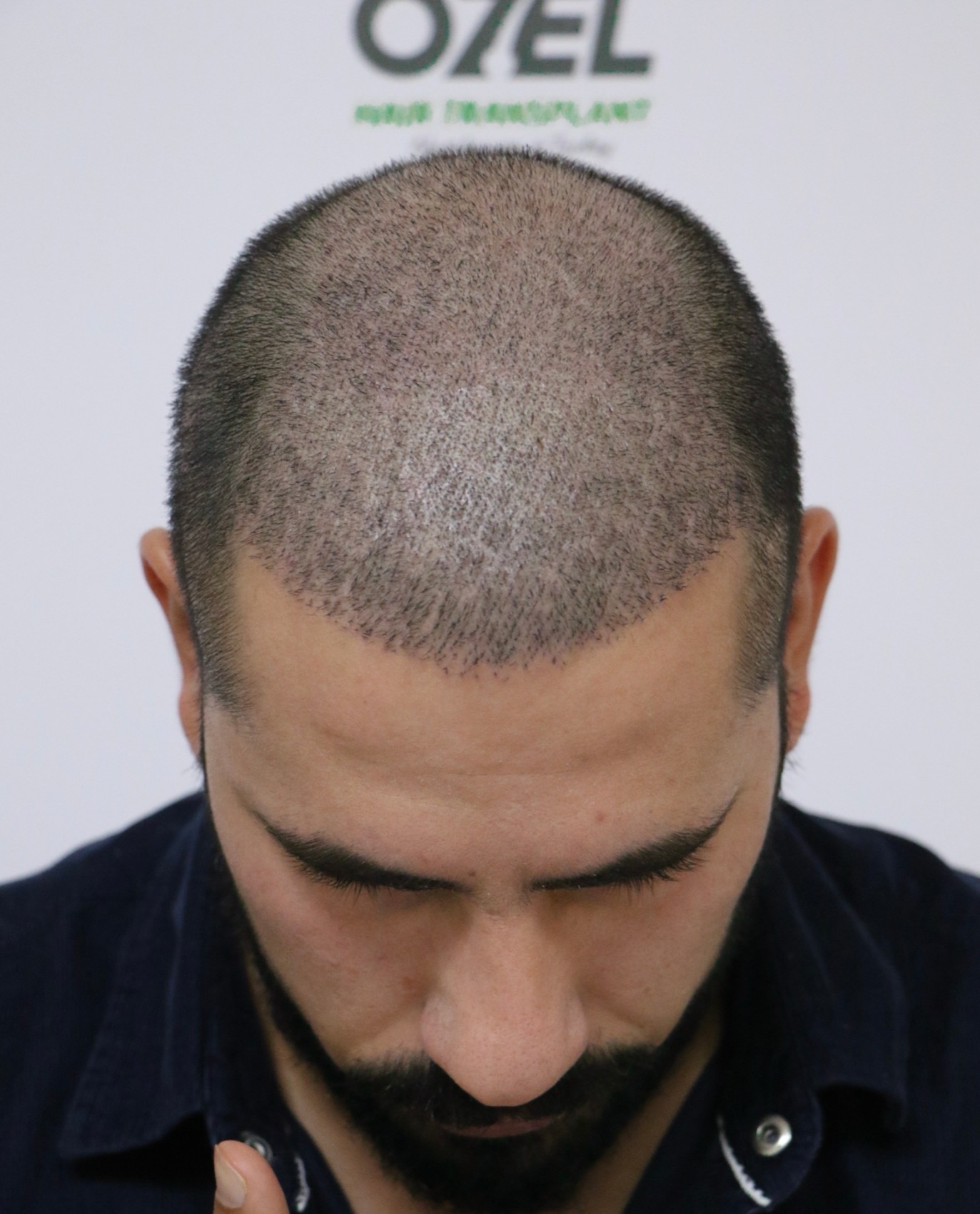
At this stage, small crusts form around each transplanted graft. They are a normal part of healing.
Washing after a hair transplant: our team explains the washing routine in detail before you travel, and you use the products in your care kit. The general rule is gentle daily washing with lukewarm water, patting rather than rubbing, without pointing a strong shower jet at the transplanted area.
Itching after a hair transplant: mild itching often appears as the skin heals. Never scratch or pick the crusts, because that can pull out a graft before it has settled. Gentle, regular washing helps relieve it.
The donor area: the donor area at the back of the head usually heals within 7 to 10 days, and the hair around it grows back to cover it.
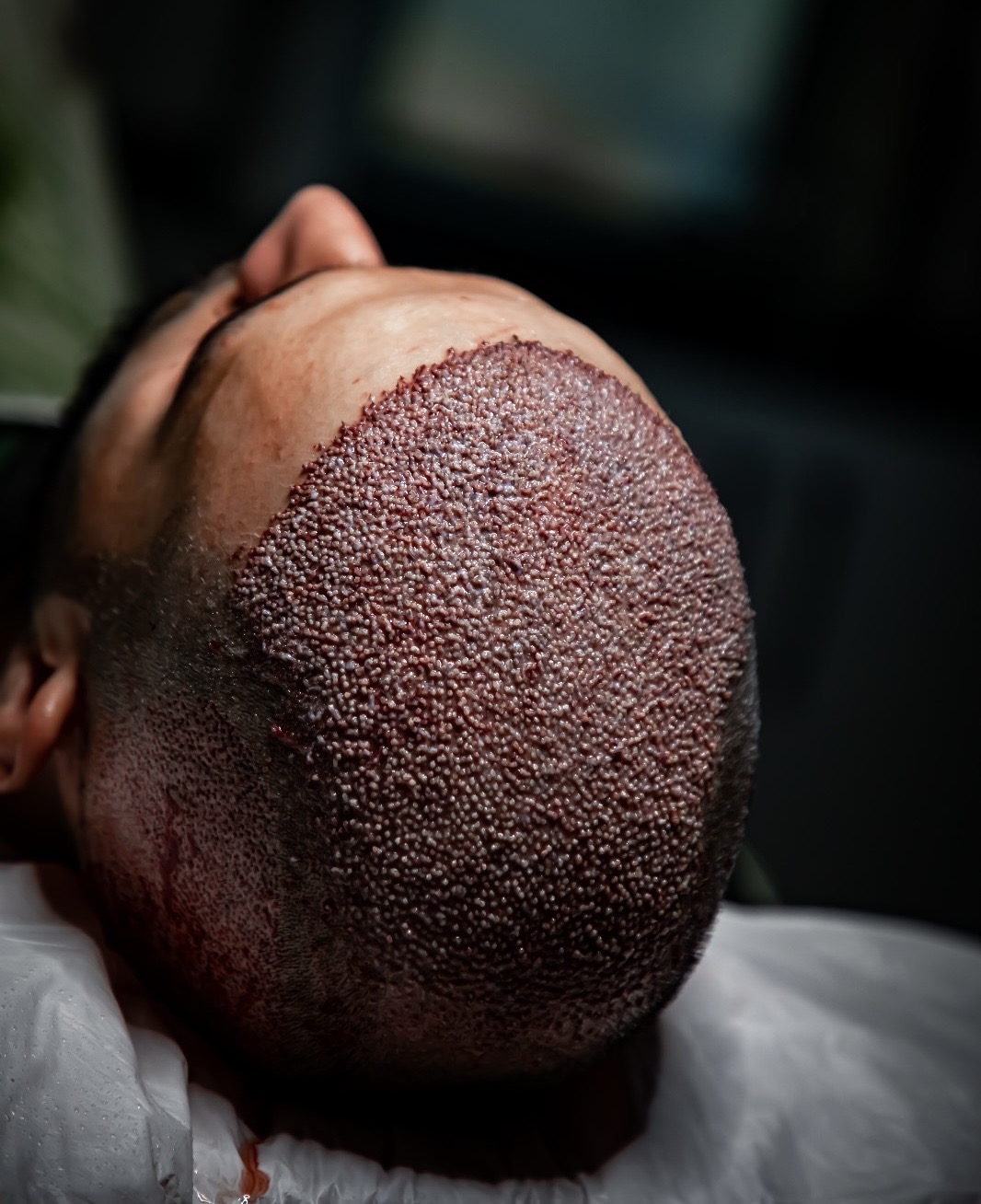
Days 10 to 14: the crusts fall off and life returns to normal
With regular washing, the crusts fall off gradually, and the transplanted area looks much cleaner. Some mild redness can remain for a few weeks, especially on fair skin, and fades with time.
By this stage, many of our patients are already back home and at work, and their dedicated coordinator stays in touch with them, checking in and following their photos.
Week 2 to month 3: temporary shedding, a stage not to worry about
This is the stage that worries patients most, even though it is completely normal.
Between about week 2 and month 2, much of the transplanted hair sheds. The reason is that the hair itself falls, while the follicle stays firmly in place under the skin and enters a resting phase before it starts a new growth cycle. A little of the original hair around the transplanted area can also shed (known as shock loss), and it usually grows back.
During this period, your head may look close to how it looked before the procedure. This does not mean the transplant has failed. It is a natural step on the way to the result.
Months 3 to 6: when does hair grow after a transplant?
New hair usually starts to appear between months 3 and 4. At first it is fine and soft, sometimes lighter in color, and it grows thicker and darker month by month.
At this stage you may notice a few small spots that look like pimples, as new hairs make their way through the skin. They are usually minor and clear up on their own; if anything worries you, send us a photo.
At OZEL, you follow this stage by video with the specialist who performed your procedure, who compares your photos and reassures you about how the growth is progressing.
Months 6 to 12: the density shows
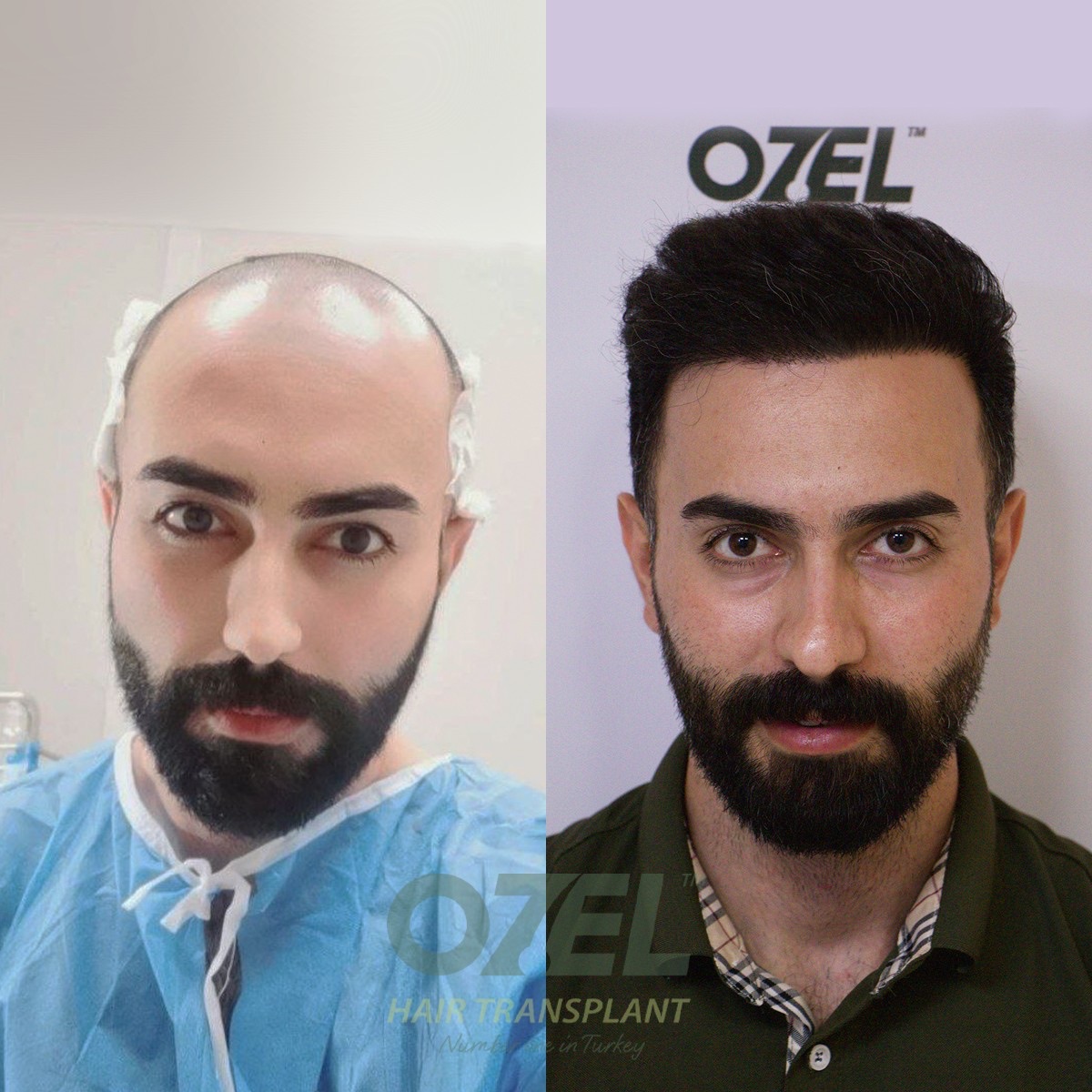
At this stage the change becomes clear to you and to the people around you. More hairs are growing, they become thicker, and the hairline that was designed for your face starts to show clearly. Many patients feel at months 6 to 8 that "their hair is back".
Months 12 to 18: the final result of a hair transplant
The final result of a hair transplant usually appears between 12 and 18 months, and the crown can take longer than the front of the head. By then the hair is complete in its density, texture and natural direction, and you can cut and style it however you like.
Because the transplanted follicles come from the donor area, which is genetically resistant to hair loss, transplanted hair is long-lasting.
When can I…? A general guide after a hair transplant
| Activity | Usually |
|---|---|
| Go back to office work | After 3 to 7 days, or once the crusts have fallen off if you prefer that no one notices |
| Walking and light activity | From the first days |
| Light exercise | After about two weeks |
| Weightlifting and intense sport | After about one month |
| Swimming (sea and pool) | After about 4 weeks |
| Wear a loose hat | After about 10 days |
| Direct sun | Avoid it in the first month, and wear a loose hat when needed |
| Cut your hair with scissors | After about 3 to 4 weeks |
| Clippers on the transplanted area | After about 6 weeks |
| Dye your hair | After about 4 to 6 weeks |
| Smoking | Best stopped one week before the procedure and at least two weeks after |
| Alcohol | Avoid it for at least the first week |
These are approximate times. Your doctor may give you different instructions depending on your case and the procedure.
Recovery after a beard transplant, an eyebrow transplant and for women
- Beard transplant: the crusts are smaller and fall off within 7 to 10 days, and the area is not shaved in the first weeks. New hair starts to grow between months 3 and 6, and the final result appears at around 12 months. Read more about beard transplants.
- Eyebrow transplant: very small crusts; avoid touching the area or applying makeup on it until your doctor allows it. The new hairs are trimmed regularly to keep the shape. Read more about eyebrow transplants.
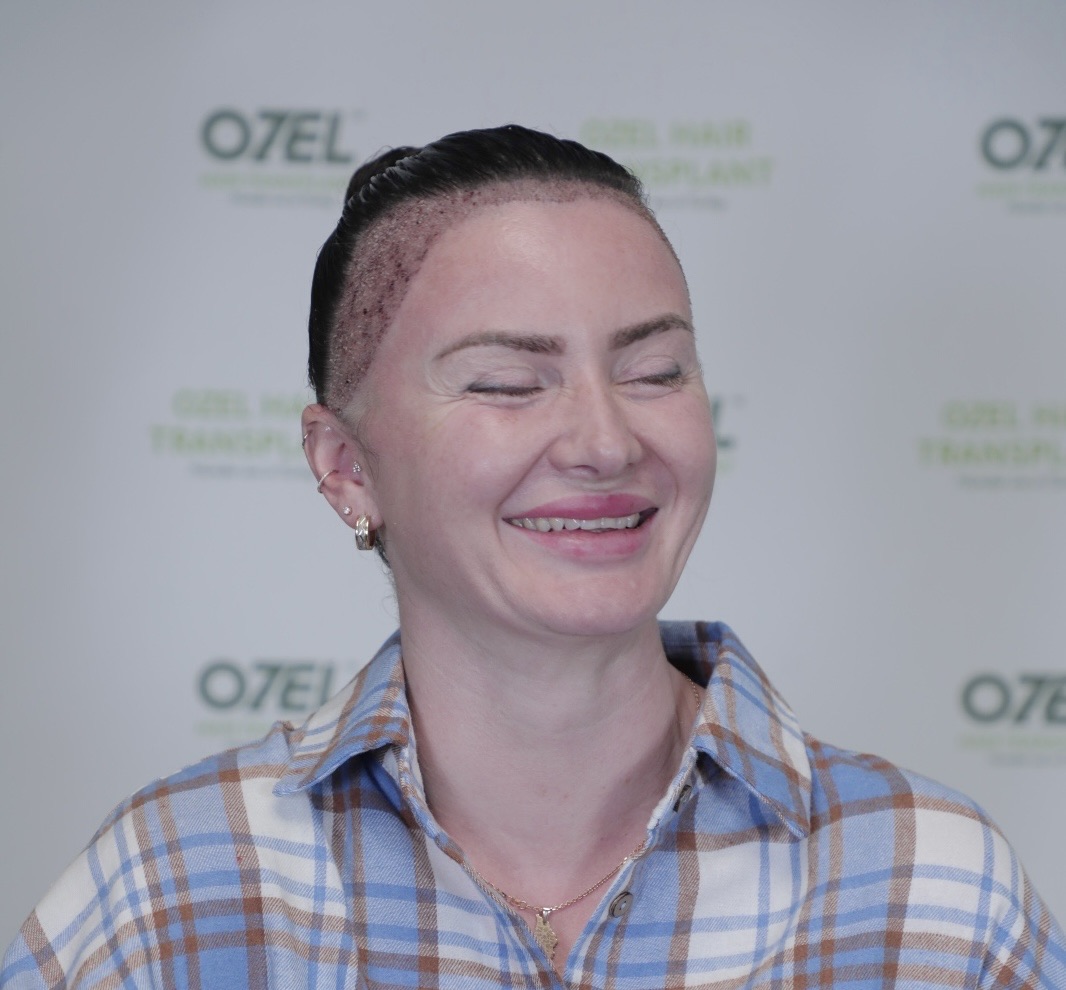
- Unshaven hair transplant for women: the existing long hair covers most of the crusts, so many women return to their social life sooner. Read more about hair transplants for women.
How OZEL follows you through every stage of recovery
Recovery does not end when you leave Istanbul, which is why our package includes:
- A care kit for 6 months: the washing and care products suited to each stage.
- A medication kit for 1 month: what you need in the first weeks, with clear instructions on how to use it.
- A dedicated coordinator for 3 years, free: who follows your photos and answers your questions in your language.
- Video follow-ups with the specialist who performed your procedure: who assesses your growth personally.
- An AI assistant: that answers your questions instantly at any time, such as "is this normal on day 10?".
All of this is part of the all-in price. Read what is included in the price of a hair transplant at OZEL, or compare the techniques in sapphire FUE vs DHI vs classic FUE.
One last tip: photograph your head from the same angles and in the same light every month. The daily change is too small to notice, but the monthly comparison will show you the difference clearly.
Hair transplant recovery: frequently asked questions
How long does recovery after a hair transplant take?
Most patients are back to normal life and office work within about a week, and the crusts fall off between day 7 and day 14. The final result of the hair appears between 12 and 18 months.
Is hair shedding after a transplant normal?
Yes. Between week 2 and month 3, much of the transplanted hair sheds, while the follicles stay under the skin and start growing again from about month 3.
When does hair grow after a transplant?
New hair usually starts to appear between months 3 and 4, fine at first, then grows stronger and denser until months 12 to 18.
When can I wash my hair after a hair transplant?
The OZEL team explains the first wash and the routine for the following days before you travel. Washing is daily and gentle, patting rather than rubbing, with the products in your care kit.
How should I sleep after a hair transplant?
Sleep with your head slightly raised for the first nights, for example on two pillows or with a travel pillow around your neck, so the transplanted area does not rub against the pillow and the swelling stays down.
Why does the forehead swell after a hair transplant?
Forehead swelling is common on day 2 or 3, caused by the local anesthesia fluid. It can move slightly down toward the eyes and usually goes away within a few days. Sleeping with your head raised helps.
When do the crusts fall off after a hair transplant?
The crusts usually fall off between day 7 and day 14 with gentle, regular washing. Never pick them off by hand.
When can I go back to work after a hair transplant?
Many patients return to office work after 3 to 7 days. Those who prefer that no one notices wait until the crusts have fallen off, after about 10 to 14 days.
When can I exercise after a hair transplant?
Light exercise after about two weeks, weightlifting and intense sport after about one month, and swimming after about 4 weeks, following your doctor’s instructions.
Does OZEL follow up with me after I fly home?
Yes. The package includes a dedicated coordinator for 3 years, free, video follow-ups with the specialist who performed your procedure, an AI assistant, a 6-month care kit and a 1-month medication kit.